RSS Forms Panel on OTT Censorship: Will Streaming Platforms Get a Censor Board Like Films?
RSS has formed a panel to examine OTT content regulation in India. Will streaming platforms face film-style certification? Here's what the current rules and experts say.
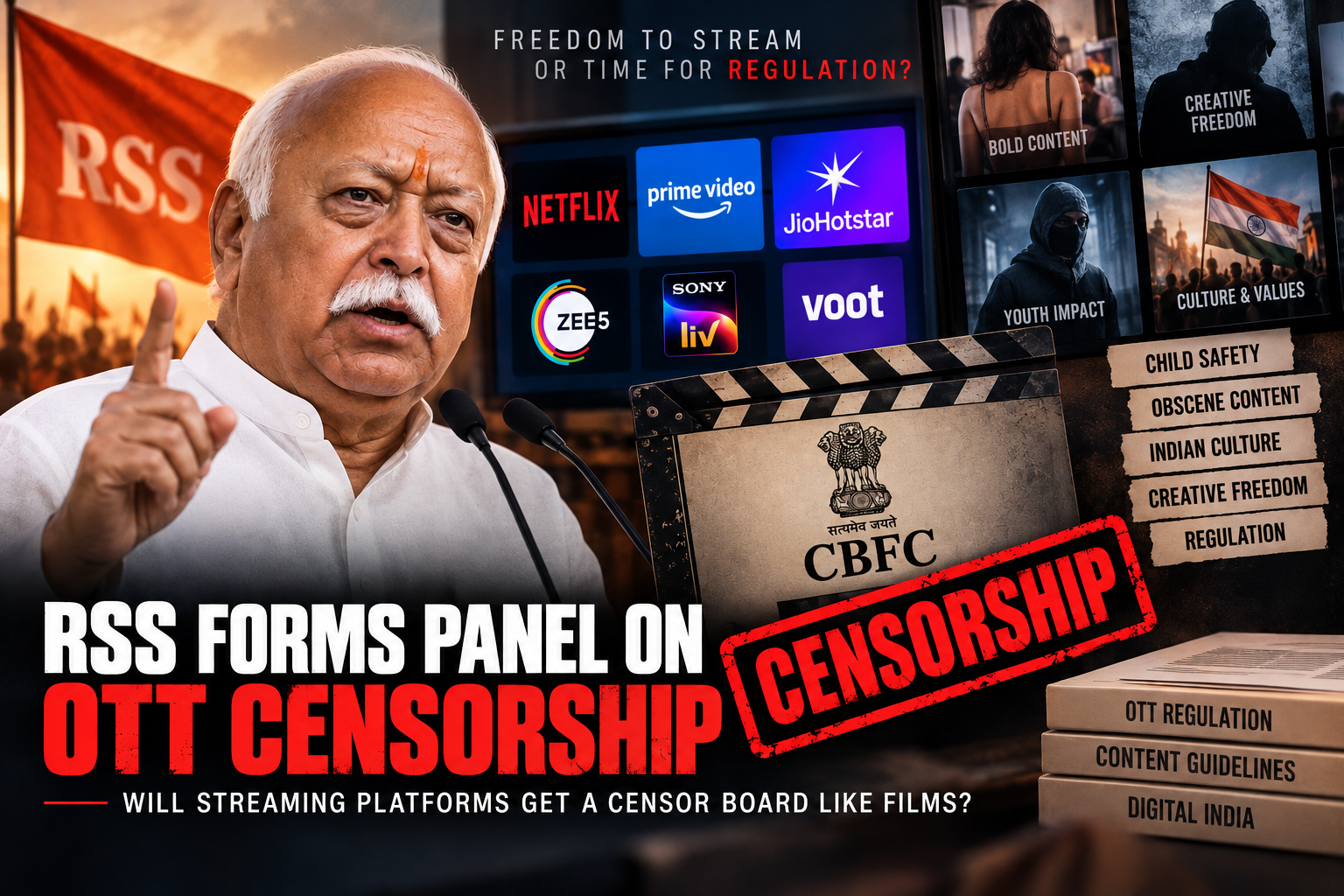
New Delhi: The debate over censorship and regulation of OTT content in India has gained fresh momentum after the Rashtriya Swayamsevak Sangh (RSS) formed a panel to examine content available on streaming platforms.
The panel is expected to look into concerns surrounding obscene content, material allegedly against Indian culture, anti-national content and programming that could have a negative impact on children and young viewers.
The RSS has argued that the growing influence of OTT platforms makes it necessary to have stronger checks on digital content. RSS chief Mohan Bhagwat has also previously expressed concerns over content available on OTT and digital platforms.
Will OTT Platforms Get a Censor Board?
For now, there is no CBFC-like censor board for OTT platforms. The RSS panel will study the issue and make recommendations. It remains to be seen whether its suggestions eventually lead to a new regulatory or certification mechanism.
Some members associated with the Sangh have advocated a system similar to the certification process followed by films. If such a system is introduced, OTT films and web series could potentially require certification before being made available to audiences.
However, OTT platforms are not completely unregulated. Under the existing IT Rules, streaming platforms are required to follow age classification, provide content descriptors and have a three-tier grievance redressal mechanism.
Trade Analyst Atul Mohan Supports OTT Censorship
Trade analyst Atul Mohan has supported the idea of censorship for OTT content.
Speaking to Dainik Bhaskar, he said that there is no reason why censorship should apply only to films released in theatres. According to him, whether a film is consumed in cinemas, on OTT or elsewhere, some form of censorship is necessary.
He also pointed out that India is a large and diverse country, making it difficult to predict when, where and how content might hurt people's sentiments. He referred to controversies that have emerged around content in the past as another reason for having stronger checks.
Vivek Sharma: Creative Freedom Should Not Mean Obscenity
Filmmaker Vivek Sharma, director of Bhootnath, believes the OTT revolution was initially expected to provide greater creative freedom to filmmakers.
According to him, many people who could not find enough creative freedom in theatrical cinema expected OTT platforms to provide an alternative. However, he feels that in some cases, creators have misunderstood creative freedom as a licence to show obscenity.
The debate therefore goes beyond censorship. It is also about finding the right balance between creative freedom, social responsibility and audience protection.
OTT vs Films: What Are the Rules?
Films released in theatres must obtain certification from the Central Board of Film Certification (CBFC) before their theatrical release.
OTT films and web series, however, do not require CBFC certification.
Instead, OTT platforms operate under the digital media framework, which includes age-based classification, content descriptors and a mechanism for viewers to raise complaints.
This difference has become one of the key arguments in the ongoing debate over whether OTT content should also undergo some form of pre-release certification.
Should OTT Have Pre-Censorship or Stronger Age Ratings?
There are two broad arguments in the debate.
One side believes that OTT content reaches audiences directly inside their homes and can be easily accessed by children. According to this view, stronger regulation is needed to prevent inappropriate content from reaching young viewers.
The other side argues that mandatory pre-release censorship could affect creative freedom. OTT platforms have become an important space for stories dealing with politics, society, crime and other subjects that may not always find space in mainstream cinema.
This raises a larger question: Should OTT platforms be subjected to film-style pre-certification, or should the existing age-rating, parental-control and grievance-redressal systems simply be strengthened?
Several OTT Platforms Have Faced Government Action
The government has taken action against a number of OTT platforms over allegedly obscene and objectionable content.
The Information and Broadcasting Ministry has previously blocked multiple streaming platforms, websites, applications and social media accounts over content that was found to violate applicable laws.
In March 2024, the government announced action against 18 OTT platforms over allegedly obscene content, along with 19 websites, 10 apps and 57 social media accounts.
In July 2025, another group of 25 OTT platforms, including Ullu-ALT, faced government action.
The government has maintained that such action is taken when content violates provisions of applicable laws and regulations.
How Did OTT Begin in India?
The OTT journey in India began in the late 2000s. Reliance Entertainment launched BigFlix in 2008, among the country's early OTT services.
In 2010, Digivive launched NexGTV, one of India's early OTT mobile applications.
The popularity of OTT grew significantly when sports, particularly cricket, moved to digital platforms.
IPL Gave OTT a Major Boost
NexGTV became one of the early platforms to stream IPL matches digitally in 2013 and 2014.
The digital streaming of IPL in 2015 then played a major role in establishing Hotstar as one of India's most popular streaming platforms. The service later became Disney+ Hotstar.
As more television shows and live sporting events moved online, OTT platforms began attracting audiences across India's urban as well as smaller markets.
TV Shows Also Moved to OTT
Platforms such as DittoTV and SonyLIV helped bring television programming to digital audiences. Viewers were no longer dependent on television schedules and could watch shows whenever they wanted.
The arrival and expansion of Netflix, Amazon Prime Video, ZEE5 and other platforms further transformed India's entertainment landscape.
COVID-19 Pandemic Accelerated OTT Growth
The COVID-19 pandemic and nationwide lockdown in 2020 gave OTT consumption another major push.
With theatres shut and people spending more time at home, streaming platforms witnessed a significant increase in viewership and subscriptions.
Platforms such as Netflix, Amazon Prime Video, Disney+ Hotstar and ZEE5 benefited from the shift in viewing habits, while free-access platforms such as YouTube also saw increased consumption.
What Happens Next?
The RSS panel's recommendations could add a new dimension to India's ongoing debate over digital content regulation.
For now, there is no indication that OTT platforms will immediately be brought under the CBFC's certification system. The larger debate is about finding a regulatory model that can protect children and address genuinely objectionable content without unnecessarily restricting creative expression.
The question India now faces is not simply “Should OTT be censored?” but rather “What kind of regulation can protect viewers while allowing creators the freedom to tell challenging stories?”
Rajni
Official editorial team covering cinema box office, OTT streaming releases, Hollywood news, and pop culture for OnscreenBuzz.com.
🔥 Related Articles & Recommended Stories
More stories from Ott
Disha Salian Case Takes Fresh Turn: Father Seeks Life Imprisonment or Death Penalty, Names Several High-Profile Figures
Disha Salian's death case has taken a fresh turn after the CBI registered an FIR. Her father Satish Salian has named several high-profile figures and sought strict punishment for those found responsible.
Salman Khan’s ‘Ulti Aarti’ Moment Goes Viral; Arpita Khan Corrects Him at Ganpati Visarjan, Yulia Vantur Also Joins the Celebrations
Salman Khan’s Ganpati Visarjan celebration took a fun turn when Arpita Khan corrected him during the aarti. Yulia Vantur and the Khan family also joined the festivities.
Shilpa Shetty Dances Her Heart Out at Ganpati Visarjan With Raj Kundra and Kids; Bappa’s Return Made It Extra Special
Shilpa Shetty celebrated Ganpati Visarjan with Raj Kundra, Viaan, Samisha and family. The actress danced to the dhol beats as Bappa was given a festive farewell.
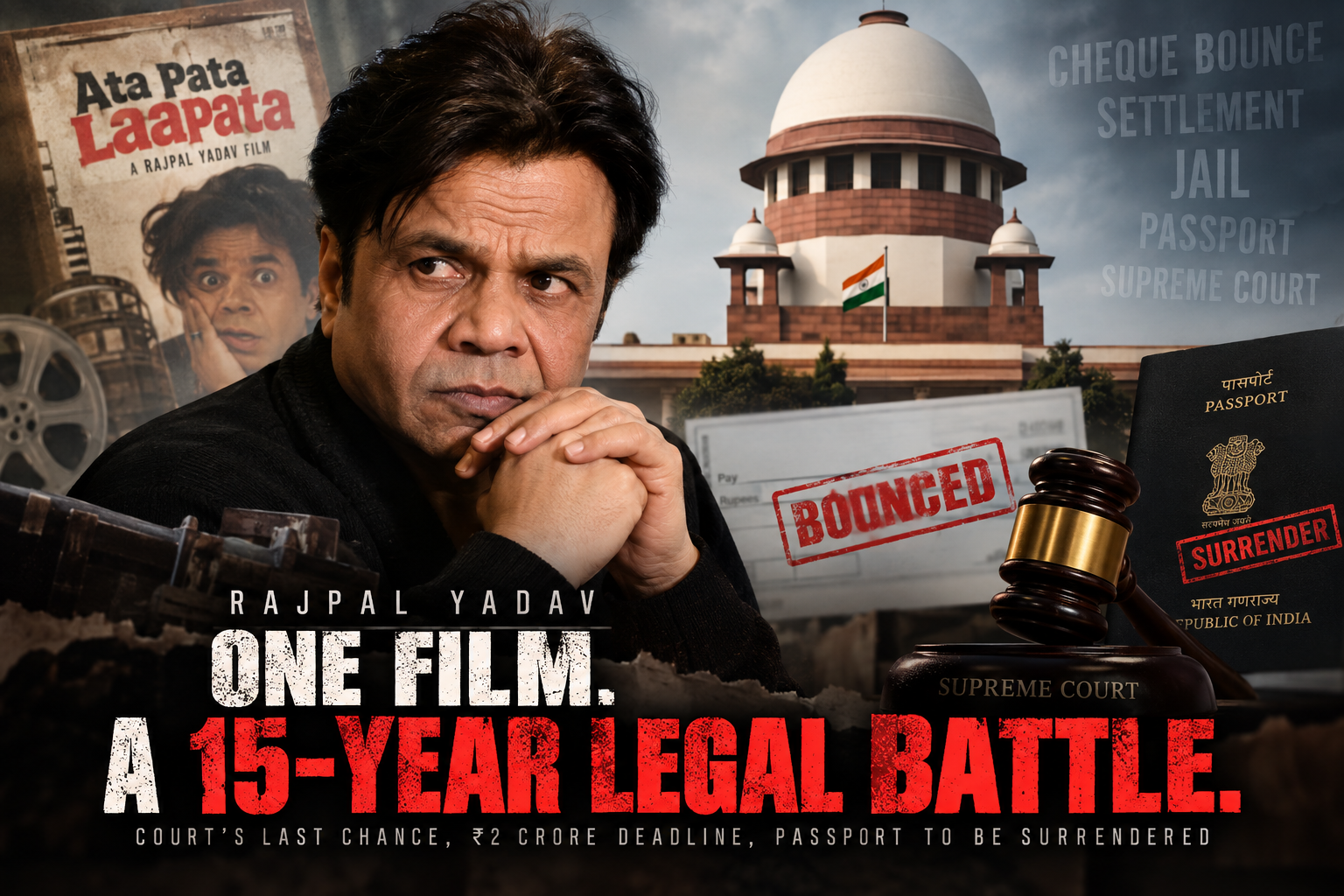
Rajpal Yadav Cheque Bounce Case: Supreme Court Gives ₹2 Crore Deadline, Orders Passport Surrender; A 15-Year Legal Battle Explained
Rajpal Yadav has received conditional relief from the Supreme Court in his long-running cheque-bounce case. Here is the complete background of the ₹2 crore deadline, passport surrender and 15-year legal battle.